


Every fall, somebody grabs a chainsaw, drops a few trees, and figures they’ll have bundles on a roadside table before Thanksgiving. It never quite works out that way.
Freshly cut wood is 50 to 60 percent moisture, and eight weeks of September sun isn’t enough to bring that number down to a low enough moisture content where a customer will be happy to burn it. The bundle of wood will hiss, spit, and won’t hold a flame — that customer doesn’t come back, or worse, your wholesale arrangement goes down the tube.
The date that decides your next sales season isn’t necessarily the day you cut the tree, it’s the day you split the wood and start the good seasoning process. Get that timing right and the rest of the calendar falls into place beautifully. Get it wrong and you’re selling green, poor-burning wood with your name or brand on it.
This guide walks through some best practices for what to cut, split, bag, and sell in each season, plus a couple of things a lot of firewood sellers never think to check before they load the truck or bag their firewood.
Firewood Runs on Two Clocks
Selling firewood well means juggling two calendars.
The first is a production clock. Cut, split, season, bag, sell: figure on close to two years from standing tree to finished bundle if you’re doing it perfectly. Rush any one of those steps and it appears later in the burn quality.
The second is a sales clock. Recreational buyers, campers, cottagers, weekend fire-pit crowds, start spending in spring and keep going through summer. Heating buyers are a different crowd entirely, with demand climbing hard from late September and staying strong into January.
Most firewood sales and bagging operations end up chasing one of those curves and letting the other go for half the year. The sellers who build something closer to a year-round business are the ones thinking about these two calendars at the same time.
The Cutting Window Is Ideally Late Summer Through Winter
Old-timers will tell you to cut when the sap in trees is down, and there’s real science behind that advice – it’s not just folklore.
Data from the University of Maryland Extension suggests cutting when above-ground sap content is at its lowest, which means a stretch running from late summer through winter. Their own research actually makes the counter-case for you. The study trees were felled in mid-April, right when spring sap flow peaks and wood moisture sits at its highest point of the year, and the researchers noted this likely worked against them. April turned out to be one of the worst months they could have picked.
For Prairie cutters, winter comes with a few practical advantages beyond the sap argument. The ground freezes, so equipment gets into the bush without tearing up soft trails, and bugs aren’t much of a factor. Once the leaves have dropped, there’s nothing hiding what you’re cutting into either. Those things do more for a winter cutting schedule than sap chemistry ever will.
Spring: Split Now or Lose the Year?
The Maryland Extension study split live hickory into rounds and left half of them whole. After a full year sitting uncovered, the unsplit rounds still measured over 30 percent moisture, which is essentially still green wood. The split pieces from the same trees reached roughly 20 percent moisture, the standard for well-seasoned firewood, in about six months.
The only real variable was whether the wood got split, yet the outcome was a difference of six months versus a year that still wasn’t ready to burn.
This is the difference between wood you can sell this year and wood you’re still fighting with next winter, and it comes down to one afternoon with a splitter.
For example, Winnipeg (where we’re based) gets a real drying window of roughly May through September, and that’s about it. A seller in a warmer climate who misses their spring split loses a few weeks of ideal weather. A seller here who misses it loses the entire season, since there’s no second stretch of good drying weather waiting later in the year.
Spring’s job list is short but not really optional if you want dry wood by fall: split everything that’s coming down this year, stack it off the ground with the top covered and the sides open to airflow, and get your firewood bags ordered before the season gets busy. Firewood bags are the one item on this list that takes almost no effort to plan ahead for and causes real headaches when you don’t.
Summer: Peak Drying Meets Peak Camping Season
Summer is doing double duty. Your wood is drying faster than at any other point in the year, and your recreational customers are buying more than at any other point in the year too.
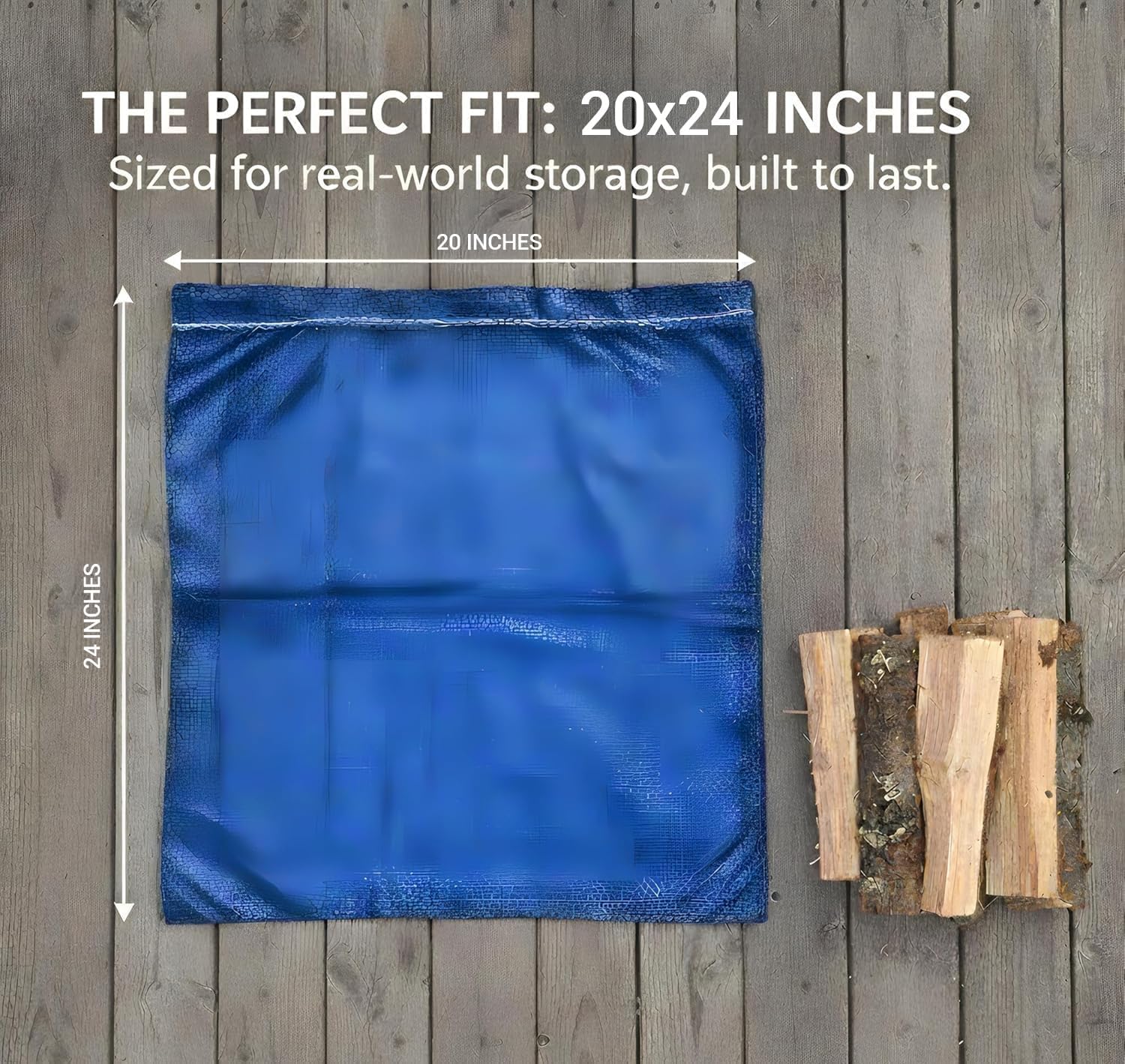
Something that catches a lot of first-time sellers off guard is that you don’t need to wait for wood to be fully dry before it goes in a bag. Mesh firewood bags like ours keep air moving straight through the bundle, so seasoning keeps happening even after the bag is tied off and stacked on a pallet. That’s a real advantage over plastic wrap or shrink film, which trap moisture against the wood instead of letting it escape. Bag too early in something sealed and you’re looking at a moisture or mold problem down the road.
Bag your firewood in mesh and the wood keeps drying much like it never left the stack!
Summer is also when the smarter move isn’t about wood at all, it’s about phone calls! Gas stations and convenience stores are setting their fall shelf plans well before the first cool mornings, and the seller who reaches out in July gets the shelf space. The seller who calls in October is asking for a favor.
Fall: Stage Your Inventory Before the First Cold Snap
Heating demand starts climbing in late September and keeps growing through the rest of the fall.
There’s a clear trigger for the whole season, and it’s the first hard frost. You probably know that everyone with a wood stove suddenly remembers they need fuel at the exact same time, and the sellers who already have wood seasoned and stacked are the ones who cash in. The sellers scrambling to bag inventory during that rush are leaving money on the table.
The wood moving off your shelf this fall was probably cut roughly a year ago. That’s the two-clock idea from earlier.
Gas station bundles in the Winnipeg area run around $13.99, while marketplace listings for loose bundles average closer to $6 to $7. That difference is a big part of the case for building out a retail channel instead of relying only on driveway sales.
Winter: Sell Hard, Cut Harder!
Winter is peak heating season and the open cutting window at the same time.
Species matters more here than in any other season, since winter buyers are burning for heat rather than ambiance, and they notice the difference pretty quickly. The Maryland numbers make the case clearly: black locust and black cherry hit burnable moisture around the 6.5-month mark, while hickory was still sitting near 24 percent moisture after a full year in the stack. Denser wood is worth more per cord and takes longer to get there (see how different wood species burn for more), and your pricing should probably reflect that instead of treating every species the same.
A couple of handling notes for the cold months: keep bagged inventory up off the ground and clear of standing snow, since moisture wicking up from underneath can undo a lot of the drying work you put in over summer.
How Far Ahead Can You Bag?
How long a mesh firewood bag holds up outdoors is really what decides whether your summer bagging plan works, and it comes down to UV resistance.
A mesh firewood bag rated for around 1,600 hours of UV exposure like ours holds up outdoors for 8 to 12 months without breaking down. A bag without that rating can start failing in as little as 4 to 6 weeks in direct sun, splitting at the seams and dumping wood before it ever reaches a customer. For a closer look at what wears a bag out, see how long mesh firewood bags actually last.

That’s the real cost of a cheap bag. It’s not the few cents you saved on the bag itself, it’s the labor of re-bagging split-open inventory in the middle of your busiest month, plus whatever product you lost to the ground in the meantime. Buy once with the right UV rating and you can bag in July with confidence it’ll still be intact for a November sale.
Know the Firewood Movement Rules Where You Sell
A step a lot of sellers skip entirely is checking whether they’re allowed to move firewood into every market they’re planning to hit. Your legal sales radius can be smaller than your delivery radius.
The reason comes down to invasive pests. Firewood is one of the primary ways insects and tree diseases travel long distances, hitching a ride in bark and cut ends instead of spreading on their own. Because of that, the Canadian Food Inspection Agency designates regulated areas around known infestations and restricts what firewood can leave them. Those boundaries change as new detections come in, so this isn’t something you check once and forget. It’s worth a quick look before every new season.
Winnipeg is a good example. The city has been a CFIA-regulated area for emerald ash borer since it was confirmed there in November 2017, and moving firewood of any species out of the regulated area without written CFIA permission goes against the rules. That last part trips people up constantly, since it’s not just ash wood that’s restricted. Cutting and selling nothing but poplar or elm doesn’t get you an exemption, because the pests can hide in the bark and cut ends of any species riding along in the same load.
The broader lesson: wherever you’re cutting and selling, find out whether your area falls inside a regulated zone and where that boundary ends. Provincial rules sometimes are on top of the federal ones, and individual parks or campgrounds frequently set their own firewood policies on top of both. Checking with the CFIA for your specific region beats assuming last year’s rules still apply.
If you’re operating outside any regulated area and just looking for a sensible default, the general guidance from firewood conservation groups is to keep wood within 50 miles of where it’s going to burn.
There’s another reason this goes beyond paperwork. Dutch elm disease is now well established across Manitoba, and it likely got its start here through firewood that campers carried in from somewhere else. Rules like these exist because that kind of thing happens more often than most people would guess.
Get Your Bags Before the Season Gets Ahead of You
The seller who plans ahead and orders mesh firewood bags is bagging wood in July and selling it in October. The seller who waits until October to think about bags may already be behind, and every week of that delay is a week of inventory sitting exposed instead of ready for sale.
St. Boniface Bag Co. stocks UV-rated mesh firewood bags built to hold up outdoors through a full bagging-to-selling cycle, whether you’re supplying a gas station near you or filling your own roadside stand.
Get a quote and get your firewood bags on hand before the next cutting window opens – call today to learn more or order online.